10 Micro SaaS Ideas to Validate Demand in 2026
Explore 10 micro SaaS ideas with target users, problem statements, and practical ways to validate demand before you build. Includes 2026 examples.

You've got a working weekend prototype sitting on localhost, a clean landing page in a private repo, and zero email subscribers. Now comes the part that stalls most solo developers. You don't know if anyone will pull out a credit card, or if you're about to burn three months building software for a buyer who doesn't exist.
Small software niches still work for solo founders, provided the buyer, the workflow pain, and the proof of demand are concrete. Broad hype rarely translates into paid accounts. In a 2025 survey of 1,500 owners conducted by NEXT and reported by WHIO, only 28% of small businesses reported using AI, which is a sharp reminder that real buyers adopt tools slowly unless a specific operational headache forces their hand.
Instead of chasing market-size decks, the strongest micro SaaS ideas let you test willingness to pay in seven days. Below are ten focused software models built around data, community, and transaction workflows. Each entry breaks down the target user, the core problem, the practical trade-offs, and a one-week validation test you can run using a pre-sale, a cold reply rate, or a billing-verified benchmark before writing production code.
1. Revenue-Verified Startup Directory
Self-reported revenue screenshots have wrecked trust across indie software circles. Official economic datasets don't close that gap either, because programs like the U.S. Census Bureau's Nonemployer Statistics, which tracks establishments with no paid employees and total receipts from 1997 onward, classify companies by industry and payroll status rather than by recurring software metrics. A revenue-verified startup directory solves this by pulling live figures directly from billing providers so founders, journalists, and acquirers compare businesses on documented numbers.
Here is how a focused directory structures discovery around verified business performance.
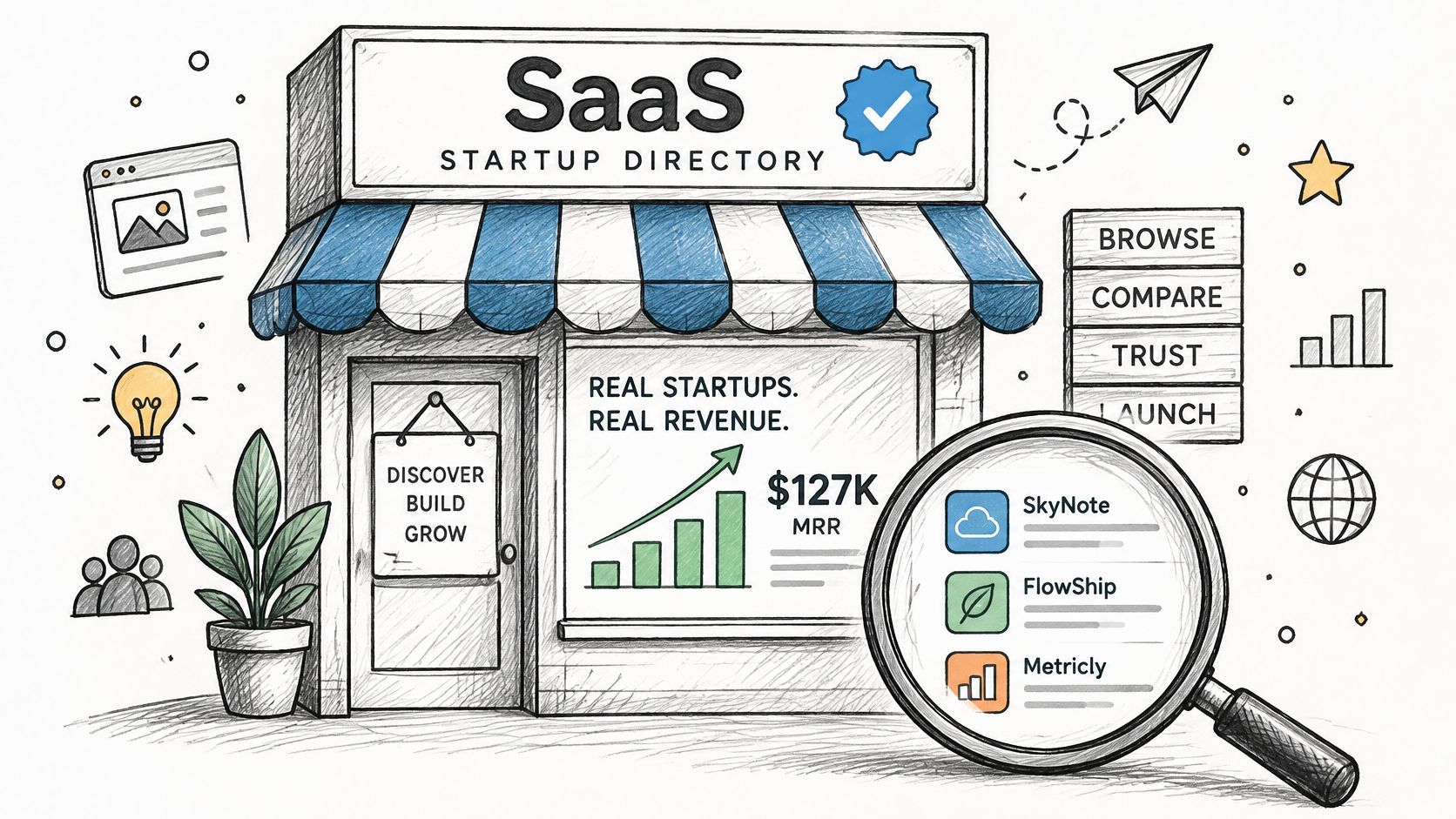
Established sites show pieces of this model: Indie Hackers publishes founder milestones in a community feed, Product Hunt ranks daily launches, and Flippa displays revenue on businesses for sale. Your edge as a solo builder is tightening the scope to one vertical, such as Shopify apps or developer tools, and publishing live revenue charts alongside clear labels separating verified figures from self-reported fields.
One-Week Validation Test and Trade-Offs
Say you want to build a verified directory for bootstrapped WordPress plugins. Skip the full backend for now. Message thirty plugin founders who already post revenue updates publicly, offer them a featured launch profile with a verified badge, and ask them to share a read-only Stripe key or pay for a sponsored slot. If fewer than ten founders agree to connect billing within a week, your audience doesn't care enough about public verification yet.
- Start with Stripe first: Supporting one or two major billing providers keeps onboarding simple before you add niche processors.
- Label data sources clearly: Tell visitors exactly which numbers come straight from a billing API and which ones are founder-entered, as outlined in this guide to revenue verification for online businesses.
- Seed with public sharers: Recruit founders who already share transparent numbers on social media to solve the cold-start problem.
- Cut submission friction: Use AI-assisted form prefill so founders aren't typing out descriptions, pricing tiers, and feature lists by hand.
The main trade-off is cold-start liquidity. Directories earn little until search traffic and buyer eyeballs compound, so expect slow early revenue unless you charge for sponsored placements from day one.
2. Micro-Business Acquisition Marketplace
A solo developer builds an invoicing extension that earns steady recurring revenue, burns out after two years, and wants a five-figure exit. Traditional business brokers ignore deals that small, and posting in a generic forum attracts tire-kickers asking for free code audits. A micro-business acquisition marketplace serves owners of small SaaS tools, e-commerce stores, and mobile apps who need a structured way to present financials and talk to vetted buyers.
This illustration captures the clean handoff buyers and sellers want from a specialized marketplace.

Acquire.com, Flippa, and Empire Flippers already prove buyers will pay for deal flow, so cloning their breadth is a losing move for one person. The opening is in depth rather than width: pick one asset class, such as micro-agencies or Chrome extensions, and standardize what every listing shows. Buyers comparing opportunities need consistent templates so they can evaluate a SaaS business for sale without chasing sellers for basic traffic and churn spreadsheets. The sharper your niche, the faster buyers learn what a fair price looks like inside it.
Marketplace reality check: Two-sided deal flow fails when listings look unverified. Requiring a connected billing account before a deal goes live can reduce the number of listings, but it tends to attract more serious buyer inquiries.
That filtering effect is a feature, not a flaw. A marketplace with twelve verified listings and active buyers beats one with a hundred unverifiable listings and silence. Sellers who connect real numbers close faster because buyers skip the weeks of back-and-forth proof requests that kill small deals.
Running a Seven-Day Liquidity Test
Custom escrow software is the last thing to build. Curate a plain newsletter featuring five real micro-businesses whose owners want to sell, verify their Stripe or Shopify numbers manually over a quick screen share, and charge buyers a modest quarterly access fee to see contact details. You can also test a featured-package structure with sellers by offering a dedicated write-up and temporary homepage placement.
Ten paid buyer signups or five verified sellers inside one week means the niche has real exit demand. Fewer than that means the niche is too tiny or the owners are not motivated yet. The toughest trade-off here is circumvention: buyers and sellers will try to move deals off-platform to dodge success fees, which makes upfront buyer subscriptions or paid listing promotions far easier to enforce than commissions.
3. Subscription Revenue Analytics Dashboard
Founders hate reconciling Stripe exports inside messy spreadsheets every Monday morning. As recurring billing expands, tracking MRR, churn, net revenue retention, and cohort curves turns into a real operational job. One compilation on TechRT reported that the global SaaS market reached approximately $435.4 billion in 2026, up from $370.4 billion in 2025, and projected the micro-SaaS segment to approach $59.6 billion by 2030. Even though industry estimates vary by methodology, the volume of small subscription apps keeps creating demand for simpler financial reporting.
Focusing on One Metric Family First
Tools like Baremetrics, ChartMogul, and ProfitWell already own broad SaaS analytics. Trying to clone their entire feature matrix as a solo builder is a fast way to ship an unfinished dashboard nobody trusts. Instead, target founders who only care about one acute blind spot, such as involuntary churn from failed cards or annual plan upgrades.
Here is the core dashboard view founders expect once they connect their billing account.
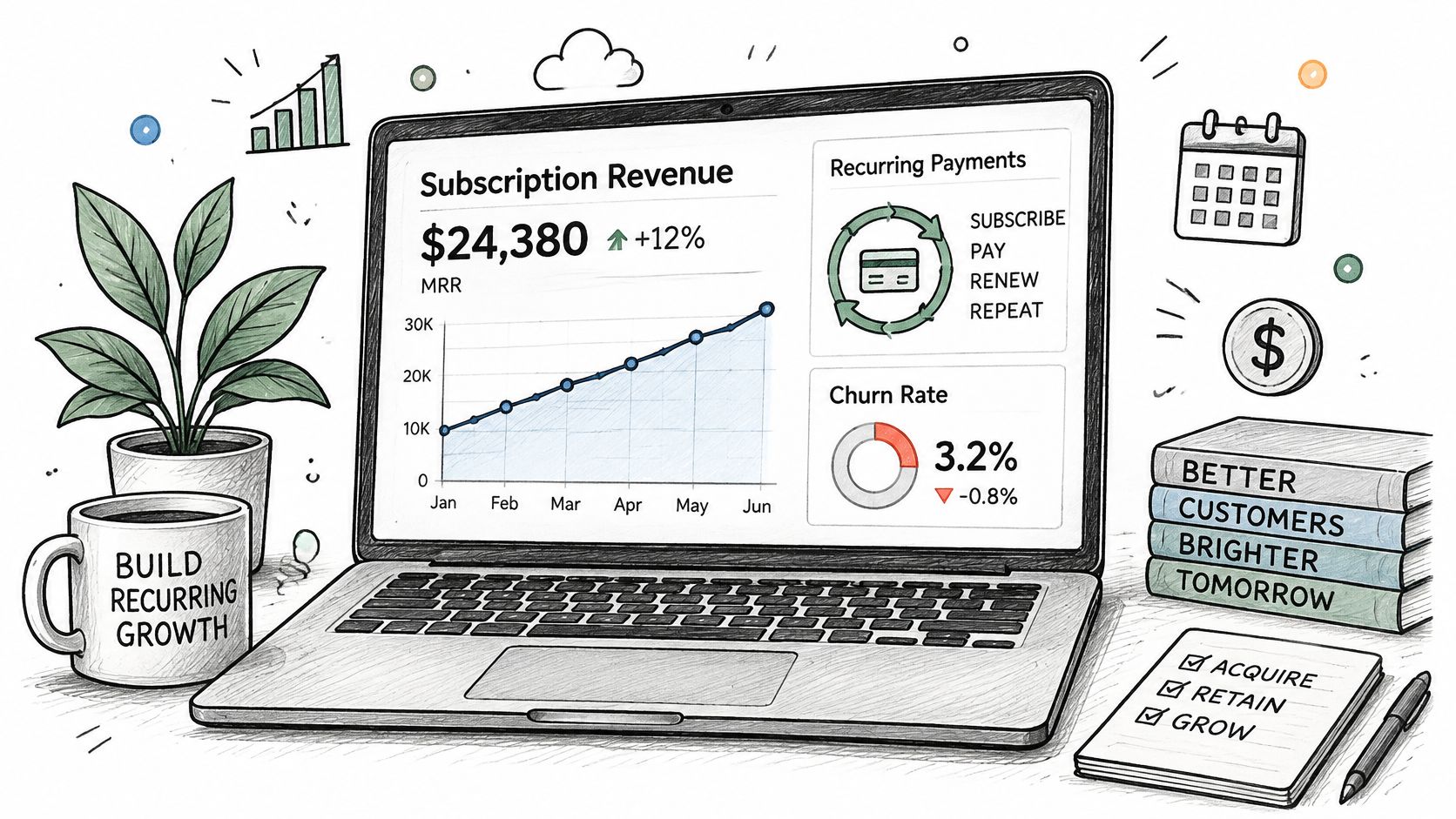
Say you build a dedicated churn-diagnostic tool for SaaS teams running on Stripe or Lemon Squeezy. Your one-week validation test is a manual audit. Offer fifteen founders a free, custom cohort breakdown if they grant temporary read-only access, then pitch a monthly subscription that sends automated weekly churn alerts and lets them publish a shareable metric page.
- Keep onboarding under five minutes: Connect via read-only API keys so founders never worry about your app touching live charges.
- Offer a public tier: Free shareable metric pages bring organic backlinks and convert lurking founders into paid dashboard users.
- Pick one billing headache: Solve failed-payment recovery tracking or trial-to-paid drop-offs before building custom SQL reports.
The trade-off is high technical expectations. If your MRR calculation disagrees with Stripe's dashboard by even a few dollars because of prorations or refunds, founders cancel immediately.
4. Product Launch Ranking and Feedback Platform
Shipping software into silence is the default experience for indie makers. Worse, standard marketing channels are flooded with automated copy. In Verizon's 2025 State of Small Business Survey of 600 U.S. small and midsize businesses, 38% used AI in at least one business function, with 28% using it for marketing and social media and 24% for written communications. When everyone publishes polished ad copy at scale, real buyers look for curated launch rankings and unfiltered peer commentary to filter out noise.
Product Hunt owns general tech launches, while BetaList captures pre-launch waitlists and Peerlist ties launches to builder profiles. A focused launch platform for one underserved category, such as developer CLI tools or B2B Shopify apps, gives makers targeted early adopters rather than vanity upvotes from random accounts.
Testing Launch Demand in Seven Days
Say you want to build a weekly launch board exclusively for solo-built B2B utilities. Don't code an upvote engine yet. Build a simple signup page promising a curated Tuesday launch digest sent to a targeted buyer list, then DM forty makers preparing an upcoming release and offer a paid priority slot with a structured launch checklist. If at least five makers pay for a launch slot and submit a short demo video plus clear pricing, you have real pull.
- Enforce anti-manipulation rules: Block fresh throwaway accounts from voting on day one, or genuine makers will abandon the leaderboard.
- Pair hype with durability: Connect launch rankings to ongoing verified revenue so visitors can separate one-day traffic spikes from real businesses.
- Coach makers on engagement: Prompt founders to answer every comment during launch day, because active threads drive higher click-through rates.
The hardest trade-off is moderation overhead. Vote rings and spam submissions show up the moment your domain gains authority, so you'll spend steady weekly hours policing quality.
5. Founder Community and Discussion Forum
Most startup advice tells solo builders to hang out in massive forums hunting for complaints, yet real revenue data paints a different picture. A January 2026 survey of more than 200 SaaS founders earning at least $1,000 per month, published by FinnGarden, found that 72% discovered their idea through prior work, workplace frustrations, or agency-client patterns, whereas only 3% found it through online forums. General forums drown useful operational advice in beginner noise and self-promotion.
A private community only holds value when every member has skin in the game. Gate entry by verified business stage, not by who can afford a cheap monthly ticket.
Indie Hackers, MicroConf, and r/SaaS serve broad founder audiences, yet operators running profitable micro-SaaS businesses often want tighter peer rooms. A founder community and discussion forum built around verified, revenue-stage businesses gives solo owners honest feedback on pricing changes, ad spend, and churn without wading through spam.
Validating Peer Demand Before Picking Forum Software
Say you target agency owners transitioning into recurring software products. Your one-week validation test is a single paid mastermind call. Pitch twelve verified founders on a monthly membership that includes structured monthly revenue check-ins, recurring AMAs with founders who have passed specific milestones, and separate channels for tactical questions, progress updates, and launch critiques.
Collect the first month's dues through a simple payment link before you configure Circle, Discourse, or a custom app. If eight founders pay and show up to the kickoff call, you have a sticky community. Tie member profiles to verified business accounts so everyone knows who is shipping and selling. The trade-off is churn tied directly to your personal energy: if you stop hosting discussions or curating members, engagement drops fast.
6. AI-Assisted Website-to-Listing Generator
Submitting a new product to ten directories, launch sites, and buyer marketplaces eats half an afternoon of repetitive copy-pasting. At the same time, small business owners are already comfortable testing narrow AI utilities. The 2025 Small Business Technology Survey of 532 businesses by the SBE Council found that 58% used AI tools or solutions, with the average business using approximately two AI tools and 82% of adopters having started within the previous two years. Becoming that specialized third tool only works when you eliminate tedious formatting inside a repeatable workflow.
Watch how directory tools and builders approach rapid listing workflows in practice.
Page builders like Framer and Webflow already generate site copy, and several startup directories now import basic metadata from a URL. An AI-assisted website-to-listing generator goes deeper for directory operators and SaaS marketers: it reads a live website, pulls clean screenshots, extracts pricing tiers and categories, and outputs ready-to-edit directory profiles suited to each platform's character limits.
Guardrails and Your One-Week Validation Test
Say you sell this widget as a drop-in embed for niche directory owners who lose half their applicants on long submission forms. Validate it in seven days by offering ten directory operators a done-for-you URL importer prototype. Ask them to pay a flat setup fee if your script turns ten raw customer URLs into review-ready draft listings in under two minutes.
- Require human review: Never publish AI-extracted drafts straight to a live directory without founder sign-off.
- Flag sensitive numbers: Highlight pulled pricing plans, user counts, and metrics in bold so founders confirm them manually.
- Save version history: Keep every draft editable with rollback states in case a site redesign breaks a re-scrape.
- Disclose crawl scope: Tell users plainly which public pages and meta tags your tool reads.
The trade-off here is replacement risk. Basic scraping plus a prompt is easy to copy, so your moat must live in directory-specific schemas, clean screenshot capture, and API hooks into listing databases.
7. Merchant of Record Payments Layer for Digital Products
Selling a low-priced software plugin globally sounds simple until you trigger VAT thresholds in Europe, GST in Australia, and state sales tax nexus across the United States. Most solo developers don't want to register with dozens of tax authorities just to sell a few hundred licenses. A merchant of record payments layer sits legally between the seller and the buyer, handling checkout, tax calculation, remittance, and payouts. Reviewing merchant of record responsibilities explained makes it clear why indie builders happily trade a higher transaction fee to offload compliance risk.
Lemon Squeezy, Paddle, and Gumroad dominate broad digital sales, yet specialized verticals still face clunky checkout flows. Say you focus purely on B2B WordPress themes, Figma component libraries, or niche developer licenses that need instant VAT invoice PDFs, team seat transfers, and automated license-key provisioning out of the box.
Testing Willingness to Switch Checkout Providers
You cannot legally launch a full merchant of record in a weekend because underwriting, banking partners, and tax registrations take serious capital and compliance work. You can, however, validate a specialized wrapper or vertical checkout layer in seven days. Build an interactive hosted checkout mockup for one niche, such as Notion template studios, publish a transparent fee calculator next to it, and ask twenty active sellers to sign a letter of intent promising to migrate one product when you launch.
Compliance trade-off: Payments products enjoy massive retention once integrated, yet fraud, chargebacks, and cross-border tax audits become your legal problem the moment you act as merchant of record.
Document tax obligations in plain English so sellers know what you handle versus what stays on their corporate income return. Connect cleanly with popular revenue dashboards right away, because founders won't adopt a checkout tool that blinds their MRR reporting.
8. Mobile App Revenue Tracking and Benchmarking Tool
Mobile developers fight a completely different billing headache than web SaaS founders. Apple's App Store and Google Play delay payout reports, obscure renewal cohorts behind awkward dashboards, and mix free trials, introductory offers, and refunds in ways that hide true subscription health. A mobile app revenue tracking and benchmarking tool pulls cross-store transaction data into one timeline and compares trial conversion and retention against similar app categories.
Say an indie iOS developer runs three utility apps and wants to know whether a sudden trial-to-paid drop is a seasonal dip or a broken paywall, or how those recurring numbers affect an eventual exit when checking an app valuation guide. Tools like RevenueCat, AppFollow, and Adapty already handle heavy infrastructure and paywall testing. A focused micro-SaaS angle is pure read-only analytics and honest category benchmarking for developers who already built native StoreKit billing and refuse to embed a third-party SDK.
Validating App Benchmarks in One Week
Start with iOS only. Pull together a simple form inviting thirty indie iOS developers to connect an App Store Connect API key (or upload anonymized CSV exports) in exchange for a private benchmark report comparing their category's renewal curves. Pitch a paid monthly alert tier for ongoing cohort tracking. If at least ten developers submit data and five pre-pay for the monthly tracker, you've found a painful gap.
- Clarify data provenance: Label which numbers come directly from Apple or Google versus modeled estimates for renewals and refunds.
- Protect statistical integrity: Publish category benchmarks only where your sample size is large enough to prevent one outlier app from skewing medians.
- Include raw exports: Give developers clean CSV and API exports so they can pipe store metrics into their own accounting or investor updates.
The trade-off is data sensitivity. App founders guard revenue numbers closely until they trust your anonymization rules, so expect personal outreach during your first month.
9. Private Due Diligence Report Generator for Buyers
A solo buyer receives a seller's Stripe export on Monday and still has no comparable view by Friday. Every deal starts the same way: Google Analytics exports, Stripe payouts checked against bank deposits, a scan for outdated frameworks, and a rough guess at customer concentration. Pricing makes the review slower. BigIdeasDB reports that 91% of SaaS companies use some form of usage-based pricing. On those deals, headline MRR hides usage spikes and model-inference costs. Skip either one and you can overpay for thin margins.
Empire Flippers runs broker-led diligence on larger deals. Acquire.com and Flippa show baseline listing stats. A private due diligence report generator fits active micro-PE operators and solo buyers on off-market deals who want the same side-by-side packet in minutes rather than days.
Your Seven-Day Paid Pilot Test
Skip the automated PDF engine for week one. Message fifteen active micro-SaaS buyers in acquisition groups and offer a flat-fee packet for the next deal they are already reviewing. Pull read-only revenue snapshots, traffic trends, tech-stack checks, and customer-concentration ratios into one template, with a timestamp on every figure. Five paid reports inside seven days is the signal to automate ingestion. Fewer than that means the pain shows up in conversation and fails at the wallet.
Four rules belong in the packet from the first sale. State on every page that the report is an informational summary, not financial or legal advice. Put the data source and pull time next to each chart so a stale number is obvious. Give sellers a link that produces a shareable summary before outreach, which shortens the email loop. Offer a free high-level health summary, then charge for the full report covering churn cohorts and gross-margin sensitivity.
The revenue is transactional. One-off buyers leave after they close, so price a monthly plan for repeat acquirers, search funds, and brokers who run several deals a quarter.
10. Public Revenue Milestone Badge and Embed Widget
Founders who build in public love sharing milestones, yet pasting static screenshots into a website footer or GitHub README screams fakeability. A public revenue milestone badge and embed widget connects to a verified revenue profile and renders a lightweight, live badge displaying current MRR, growth rate, or a clean milestone tier. It turns billing proof into a trust asset for landing pages while sending steady referral traffic back to the source directory.
Verified data badges help founders turn routine performance tracking into visible buyer credibility.

Developers already understand this pattern from Shields.io, GitHub README badges, and Stripe-connected startup pages. Say an indie founder selling a developer API embeds a verified "$5k+ MRR" badge right above their pricing table. Enterprise prospects immediately see the tool isn't an abandoned weekend project, and curious builders click the badge to inspect the verified growth curve.
One-Week Validation Test and Technical Guardrails
Design three crisp SVG badge styles (exact MRR, milestone bracket, and verified-revenue checkmark) and share them with twenty founders who already display public stats. Offer a paid pro tier with custom brand colors, dark-mode switching, and click analytics. If ten founders embed your test snippet on their live sites within seven days, you have a viral distribution loop.
Use aggressive edge caching so badges load instantly without dragging down a customer's homepage speed. Always let founders choose which exact metric shows publicly, because many owners gladly verify a "$10k+ MRR" tier while keeping precise monthly swings private. Include a clear click-through link back to the verified profile so skeptical visitors can confirm the badge isn't a hand-coded SVG.
Small utilities win when they ride existing distribution. A single embed widget placed on fifty active SaaS homepages brings more qualified traffic than months of cold posting.
The main trade-off is low standalone ARPU. Most founders won't pay a steep monthly subscription for a badge alone, so this idea works best either as a low-friction entry product or as a growth wedge that funnels users into paid analytics or directory promotions.
How the ten micro SaaS ideas compare on examples, strengths, and main risks
Ten rows, one decision. Ignore who looks established. Pick the idea whose strength you can confirm with a single signal in a week, and whose main risk shows up before you have written the product.
| Item | Example Players | Key Strength | Main Risk |
|---|---|---|---|
| Revenue-Verified Startup Directory | Indie Hackers, Product Hunt, Flippa | Trust from revenue the billing provider reports | Cold start, plus founders who will not connect billing |
| Micro-Business Acquisition Marketplace | Acquire.com, Flippa, Empire Flippers | Buyers and sellers in one place | Fraud, and deals that stall without verification |
| Subscription Revenue Analytics Dashboard | Baremetrics, ChartMogul, ProfitWell | Clear recurring metrics for subscription founders | Crowded incumbents, and figures that drift from the source |
| Product Launch Ranking and Feedback Platform | Product Hunt, BetaList, Peerlist | Launch traffic and early feedback | Vote manipulation and attention that dies in days |
| Founder Community and Discussion Forum | Indie Hackers, MicroConf, r/SaaS | Peer support and a repeat audience | Moderation load once posts go quiet |
| AI-Assisted Website-to-Listing Generator | Framer, Webflow, Product Hunt | Faster listings from a site that already exists | Copy that is wrong or generic |
| Merchant of Record Payments Layer for Digital Products | Lemon Squeezy, Paddle, Gumroad | Global checkout and tax handled for the seller | Regulation, and thin fees on each sale |
| Mobile App Revenue Tracking and Benchmarking Tool | RevenueCat, AppFollow, Adapty | App revenue and category benchmarks in one view | Store data that is limited or changes |
| Private Due Diligence Report Generator for Buyers | Empire Flippers, Acquire.com, Flippa | The same checklist on every deal | Missing source data, and liability if a report is wrong |
| Public Revenue Milestone Badge and Embed Widget | Shields.io, GitHub README badges | Verified revenue as a shareable asset | Owners who will not publish a number |
Read the risk column as the week-one test. A directory that cannot get read-only billing keys connected, a launch board nobody ranks, or a badge nobody embeds has already failed its cheapest experiment. I would rather kill that row than build past a silent signal.
Test the Demand Signal Before You Write Code
Picking from a list of micro SaaS ideas feels productive, yet real progress only starts when a stranger confirms the problem with time or money. Every model above works best when you narrow the customer to one clear profession and strip away features a free chatbot can already mimic. Data moats, peer communities, and billing-verified workflows survive model upgrades because they rely on real transactions and human trust.
Choose one idea from this list today, name one exact buyer persona, and commit to a single validation test this month. Run five paid pilot conversations, ask ten operators to connect a read-only API key for a manual benchmark, or pre-sell a small cohort before configuring authentication and billing tables. If you need help locating where those niche buyers gather to complain about existing software, tools that find subreddits for your product can surface active practitioner communities where you can request interviews rather than dropping spam links.
Measure commitment. Polite compliments on a mockup mean nothing; a signed pilot, a paid pre-order, or ten founders trusting you with verified data tells you the pain is real. If your first test falls flat inside seven days, kill the idea cleanly and test the next buyer pain without losing six months to sunk-cost code.
When you do ship and start billing customers, publishing verified numbers creates its own proof of demand for both early adopters and future acquirers. On BootstrapArena, founders can list a SaaS product for free by pasting a read-only key from Stripe or one of 12 other supported billing tools, going live in about two minutes even if revenue starts at $0. You get a Google-indexed verified revenue page with MRR, ARR, and a live 12-month revenue chart alongside scheduled launch days. When you're ready for an exit, our built-in Startups for sale section lets you list your business for free across the first 100 listings, with an optional Get featured placement if you want extra visibility in front of buyers.
Ready to turn transparent traction into customer trust, launch feedback, and qualified buyer interest? We built BootstrapArena for bootstrapped SaaS founders, e-commerce owners, and mobile app developers who want billing-verified revenue rankings, scheduled launch days, and a built-in acquisition marketplace in one place. Connect your billing provider with a read-only key in minutes and start documenting your growth publicly today.